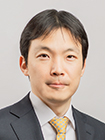
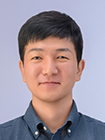
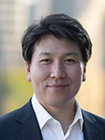
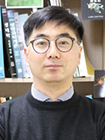
Medical Genetics: When Metabolism Meets Immunity: Genome Instability and Disease
This session brings together emerging research at the intersection of metabolic regulation, immune function, and genomic integrity, highlighting how disruptions in cellular metabolism and immune homeostasis can drive tissue dysfunction and disease progression. The talks explore hypermetabolism and hypothalamic pathology in ALS, mitochondrial ROS as a mechanistic link between nutrient excess and insulin resistance, neuroimmune interactions at CNS borders, the pathogenic role of monocyte-derived microglia in aging and neurodegeneration, and R-loop-mediated genome instability in TET-deficient myeloid cells. Together, these studies offer a broad yet integrated view of how metabolic stress, immune remodeling, and genome instability converge in human disease, while also pointing to new opportunities for therapeutic intervention and collaboration.
| November 5 (Thu) 15:20-17:50 |
| Chair: Jeehye Park (University of Toronto, Canada), Min-Hee Yi (Chonnam National University Medical School, Korea) |
15:20-15:50
|
Neuroimmune interactions at CNS borders
Jongshin Kim
Pohang University of Science and Technology (POSTECH), Korea
|
15:50-16:20
|
Mitochondrial ROS link nutrient excess to systemic insulin resistance
Won Dong Lee
Yonsei University, Korea
|
16:20-16:50
|
Profound TET loss in myeloid cells induces aggressive myeloid leukemia via R-Loop-Mediated genome instability
Myung Gon Ko
Ulsan National Institute of Science and Technology, Korea
|
16:50-17:20
|
Investigating the basis of weight loss in amyotrophic lateral sclerosis (ALS) using MATR3 S85C knock-in mouse model
Jeehye Park
University of Toronto, Canada
|
17:20-17:50
|
Monocyte-derived microglia and neurodegenerative diseases
Jung-Seok Kim
Ulsan National Institute of Science and Technology, Korea
|
Genomics & Chromosomics: Next-Generation Technologies for Multiomics Approaches and AI in Genomics & Chromosomics
Next-generation omics technologies combined with Artificial Intelligence (AI) are accelerating biomedical research by integrating massive, multi-layered datasets to understand complex genomic and chromosomic system. In this session, we invited three speakers and presented research on the large-scale omics datasets, emerging applications, and challenges at the intersection of massive omic datasets and related AI models and agents, highlighting how their integration is reshaping the landscape of genomic and chromosomic research.
Forensic Genetics: Advancing justice: Insights from Exceptional Cases
This session will address special case studies in forensic genetics that hold significant value for the advancement and maturation of the field. Complex cases-often drawing public attention or establishing legal precedents-not only demonstrate the application of cutting-edge technologies, but also highlight the multifaceted roles that forensic genetics plays across the judicial system. These case studies are expected to drive innovation in forensic genetics by overcoming the limitations of existing methodologies and promoting the development and refinement of analytical tools.
| November 5 (Thu) 15:20-17:40 |
| Chair: Hyoung-Sam Heo (Osong Medical Innovation Foundation, Korea), Hwan Young Lee (Seoul National University College of Medicine, Korea) |
15:20-15:45
|
Single-nucleus multi-omics uncovers epigenetic control of hypoxic angiogenic programs in sinonasal cancer
Kyuho Kang
Chungbuk National University, Korea
|
15:45-16:10
|
From disease omics to drugs: Transcriptome-guided target discovery and drug repositioning
Sang-Min Park
Chungnam National University, Korea
|
16:10-16:35
|
Fixative-Exchange (FX)-seq enables scalable single-nucleus and spatial transcriptomics in FFPE clinical specimens
Chang Ho Sohn
KAIST, Korea
|
16:35-16:40
|
Break |
16:40-17:00
|
From DNA barcoding to pre-colonization interval: Estimating insect access in vehicle-confined deaths
Sang Hyun Park
Kosin University, Korea
|
17:00-17:20
|
Enhancing forensic casework interpretation through DNA methylation-based analysis: A case study of pooled blood samples
Jeongmin Lee
Seoul National University, Korea
|
17:20-17:40
|
DNA metabarcoding in forensic evidence : A case study approach
Chong Min Choung
National Forensic Service, Korea
|
 Nov. 4(Wed) - 6(Fri), 2026
Gunsan Saemangeum Convention Center
Nov. 4(Wed) - 6(Fri), 2026
Gunsan Saemangeum Convention Center